
Step 01 · Day 0
Consultation
A doctor reviews your skin, hair and history, then writes an area-wise plan with the full cost, before you commit.


Eight sessions on a triple-wavelength laser built on US Coherent technology, planned by doctors around your skin and hair.
Wax and razors take hair off at the surface. The root survives, so you're back every four weeks for as long as you want smooth skin.
Based on a 90-minute full-body wax every four weeks. Laser session counts vary by area, hair and hormones.
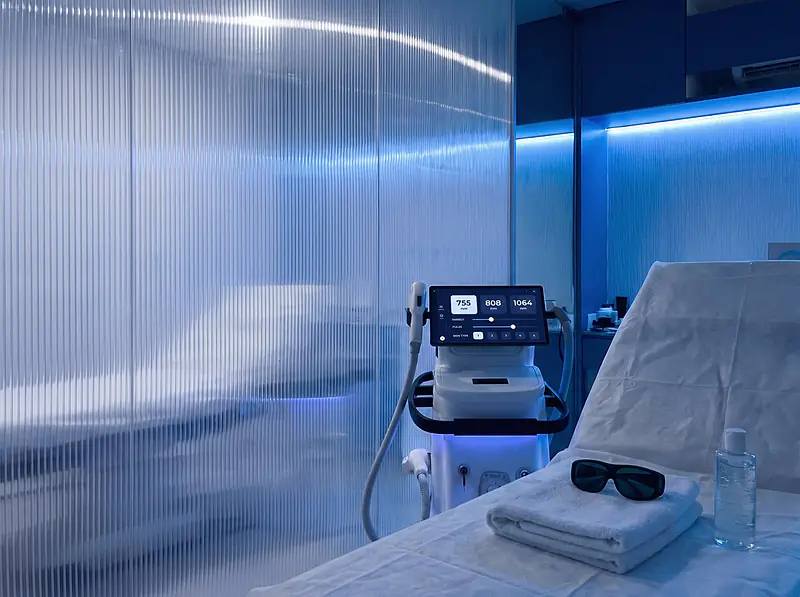
Skinoq's laser is built on US laser technology from Coherent and brought to our centres in Surat and Ahmedabad. It carries three wavelengths in a single handpiece, so every hair type is covered in the same session.
Upper-lip hair sits close to the surface; leg and beard roots go deeper. One wavelength can't reach all of them well, so ours blends three for each area.
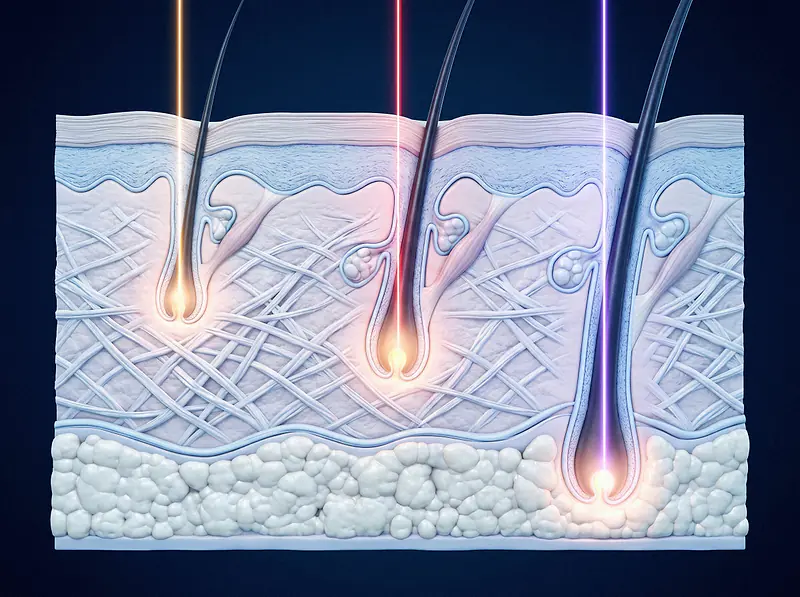
Highest absorption by melanin. Reaches shallow follicles on the upper lip, face and arms.
The workhorse for underarms, legs and bikini, where hair is dense and dark.
Travels deepest with the least absorption at the surface: the usual choice for darker Indian skin and the beard line.
Every setting comes from a proprietary protocol system developed by Skinoq's surgeons, dermatologists and medical aestheticians, and delivered by trained laser therapists under clinical supervision.

A magnified scan of each area reads hair density, thickness and how dark the hair is against your skin. Your settings are built from those numbers.
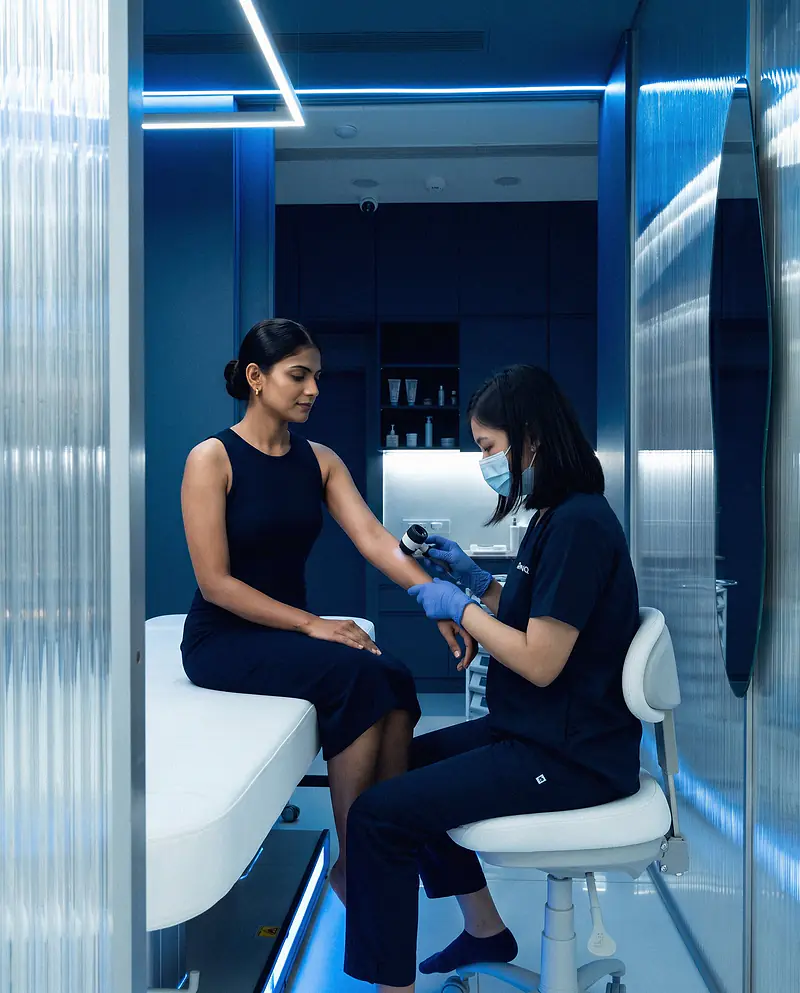
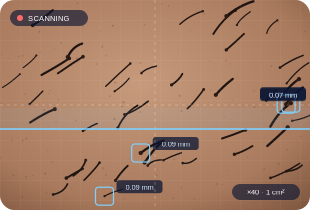
Sample report for illustration. Your readings are taken at consultation.
The pigment in the hair shaft absorbs the laser's light and turns it into heat at the root, which stops the follicle growing a new hair.
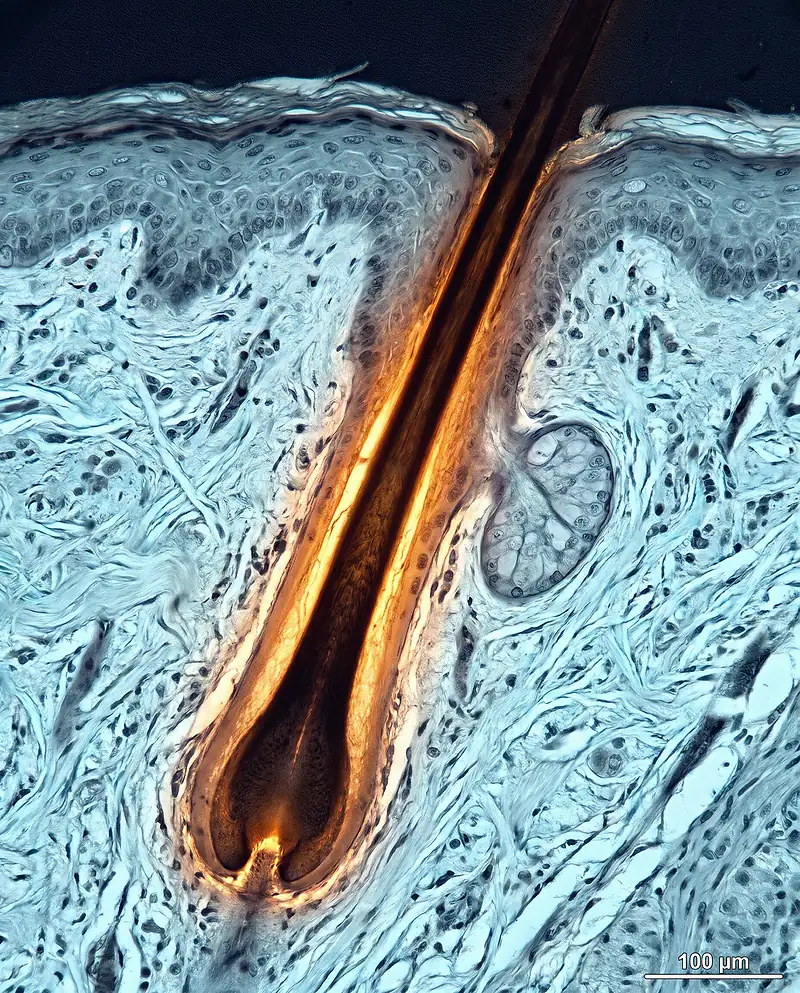
Laser needs a dark hair still attached to its root. At any moment only some of your hairs are at that stage; the rest are falling out or resting below the skin.
Illustrative. Visits are 6 to 8 weeks apart, when the next group starts growing.
Many clinics advertise a diode's brand name and run it on one setting for everyone. What decides your result is the wavelength, the settings and who holds the handpiece.
Generic diode, sold by its brand name
A verbal estimate at the desk
Operator with brief machine training
One preset for every skin
Straight into a paid session
Not measured
The machine's name
Skinoq LHRTriple-wavelength laser on US Coherent tech
Written, area-wise plan with the full cost
Certified laser therapists, doctor-supervised
Blended per area from your Hair Map
Test patch, included
Re-scanned at every visit
A measured result
The same process runs at Piplod, Pal and Bodakdev, from your first visit to your last.
A doctor reviews your skin, hair and history, then writes an area-wise plan with the full cost, before you commit.
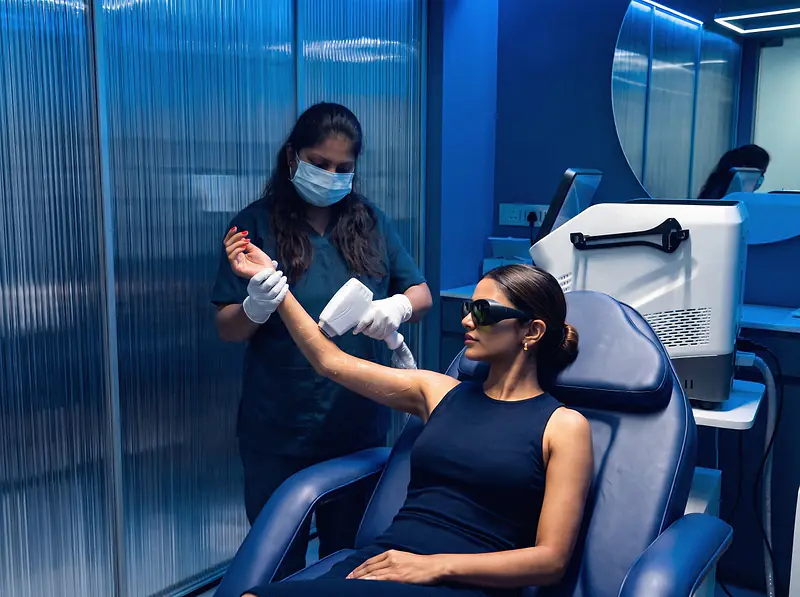
A small test patch, included with your consultation, shows exactly how your skin responds before your course is set.
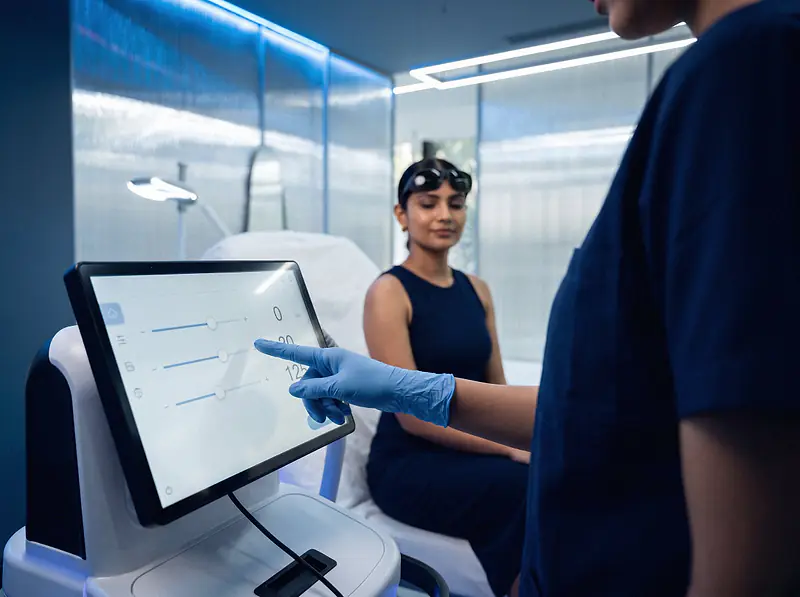
Wavelength blend, energy and cooling are set for each area from your Hair Map, never from a default chart.
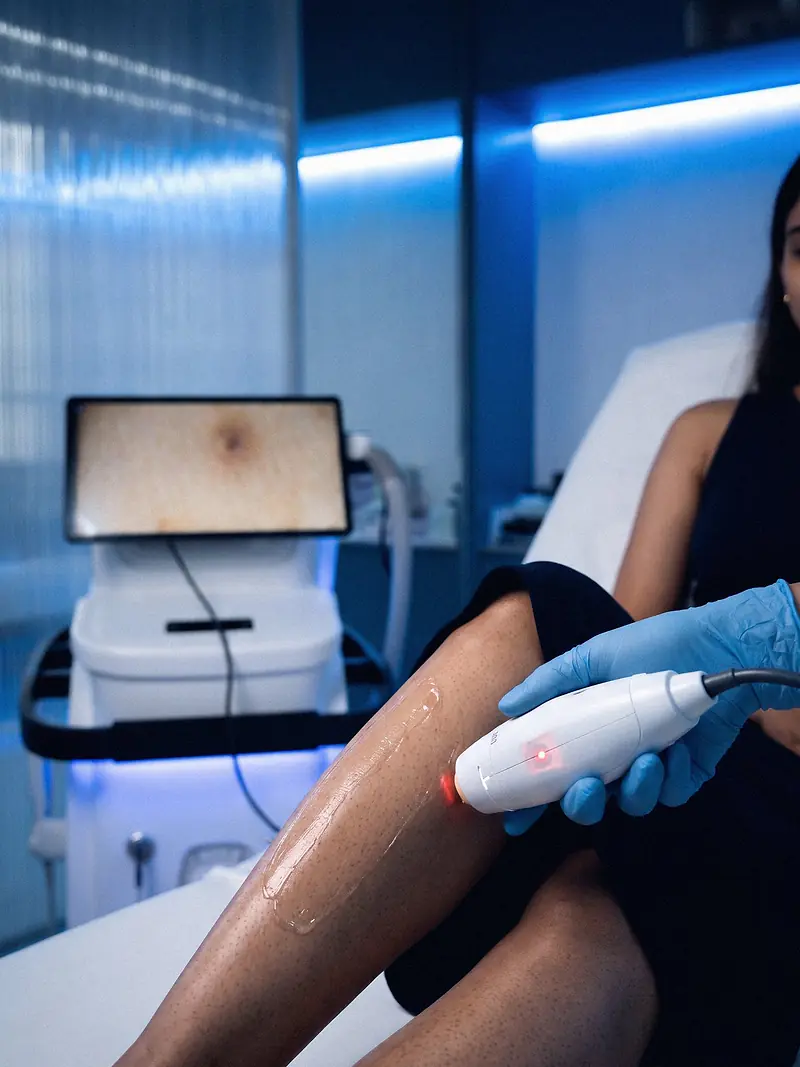
Most clients describe a warm snap. There's no downtime: you walk out and get on with your day.

Each visit starts with a re-scan. Settings change as hair gets finer, so late sessions work as hard as early ones.
Treated hair falls out over one to three weeks. Regrowth starts to look patchy.
Regrowth returns more slowly and visibly thinner, most of all on underarms and legs.
Visits move further apart as growth slows. The chin and jawline may need more.
A maintenance session every few months keeps results consistent.
Illustrative. Sessions and degree of reduction vary with skin type, hair type, area and hormones.
Get my session estimateThe same area is re-scanned at every visit, so you see density fall and your doctor adjusts settings as it does.
Sample client record for illustration. Individual results vary.
Face, underarms and legs, before and after a laser course. Drag the handle on each photo to compare.
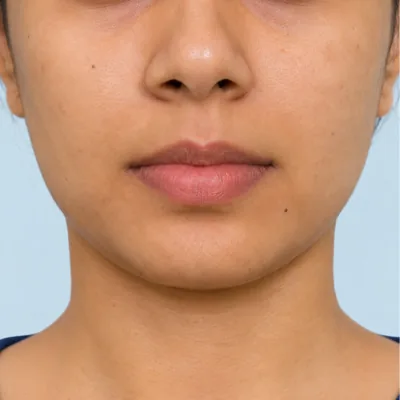
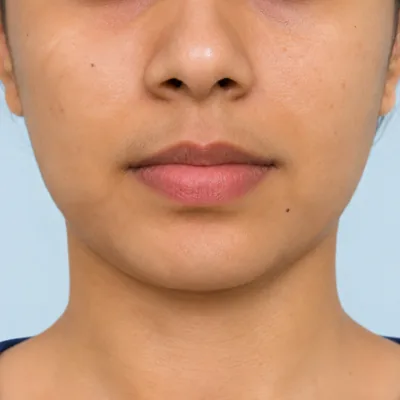
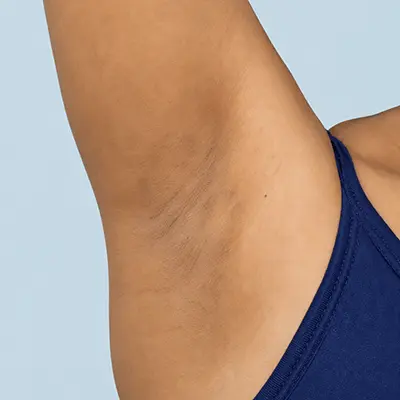
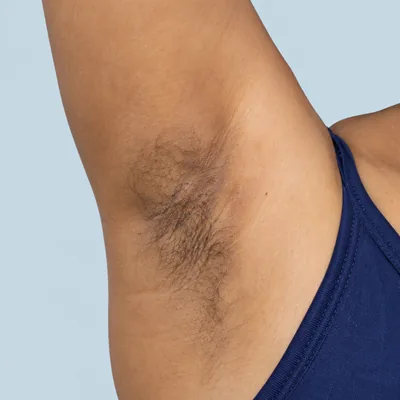
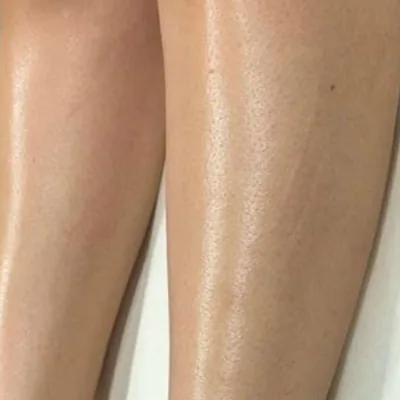
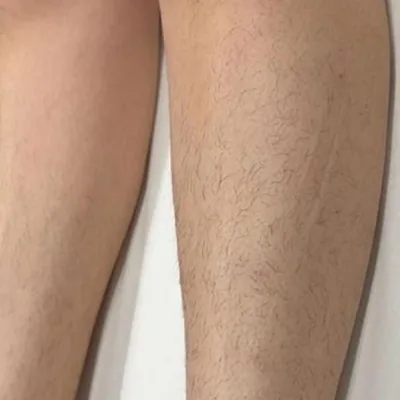
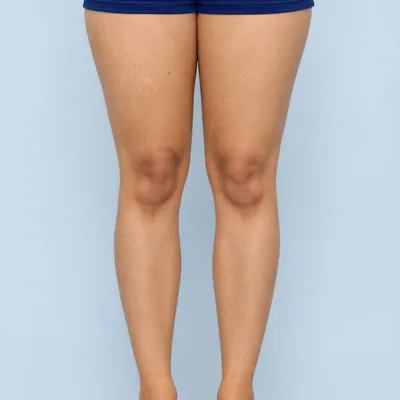
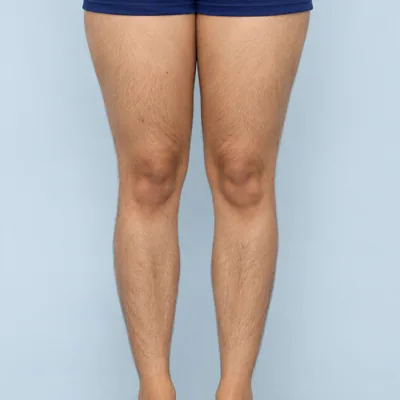
Drag the handle to compare before and after.
Sample images shown until real client photos are added. Results vary with skin type, hair type, area and hormones.

No downtime and no recovery time. Most people go straight back to work.